
Most growth-stage companies do not struggle because of weak execution.
They struggle because their positioning sounds broad, familiar, and interchangeable.
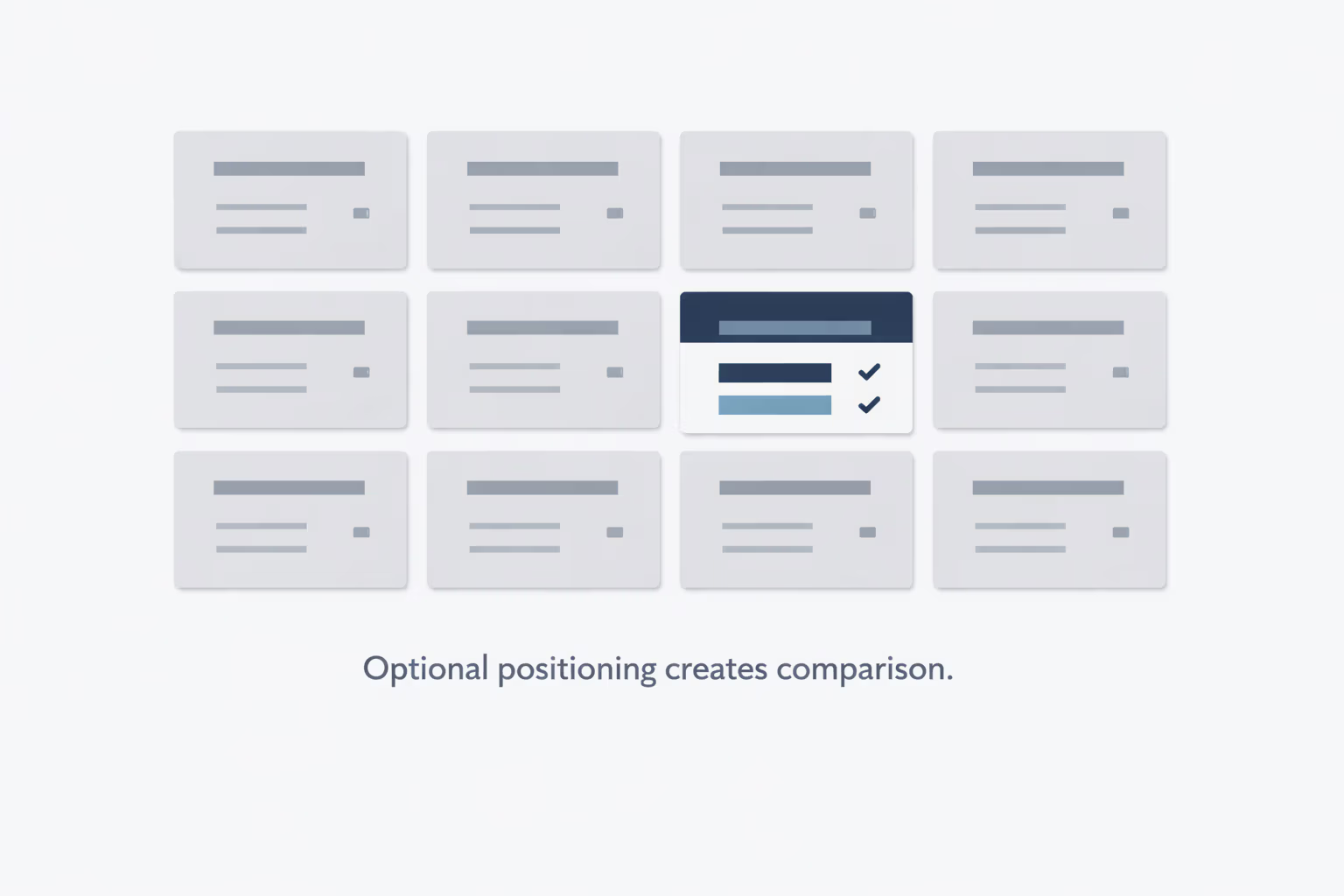
And when your message feels interchangeable, you become optional.
Optional positioning invites comparison.
Comparison creates hesitation.
Hesitation slows revenue.
What is optionality?
It shows up in messaging like:
- “We work with companies of all sizes”
- “We help improve performance”
- “We provide innovative solutions”
- “The leading XYZ”
None of these statements define anything.
When your message could describe dozens of competitors, buyers do not feel alignment.
They do not think, this is for us.
They think, this is one of many.
And the moment you become one of many, price enters the conversation faster than it should.
Optionality hides in three places.
1. Audience blur
Your message speaks to everyone, so it lands deeply with no one.
The right buyer visits your page and thinks:
“This might be for me.”
Might is rarely strong enough to drive action.
2. Problem blur
You say you solve many things.
Your buyer is trying to solve one urgent thing.
If they cannot see their problem clearly reflected in the message, they keep looking.
3. Mechanism blur
You explain what you do, but not how you do it differently.
Without a clear differentiating mechanism, your offer looks replaceable.
And replaceable offers get compared.
Usually on price.
Companies soften their messaging because specificity feels risky.
There is fear in narrowing.
Fear in excluding people.
Fear in saying, “This is who we are for, and this is what we solve.”
So they reach for broadness and call it flexibility.
But broadness often weakens the position.
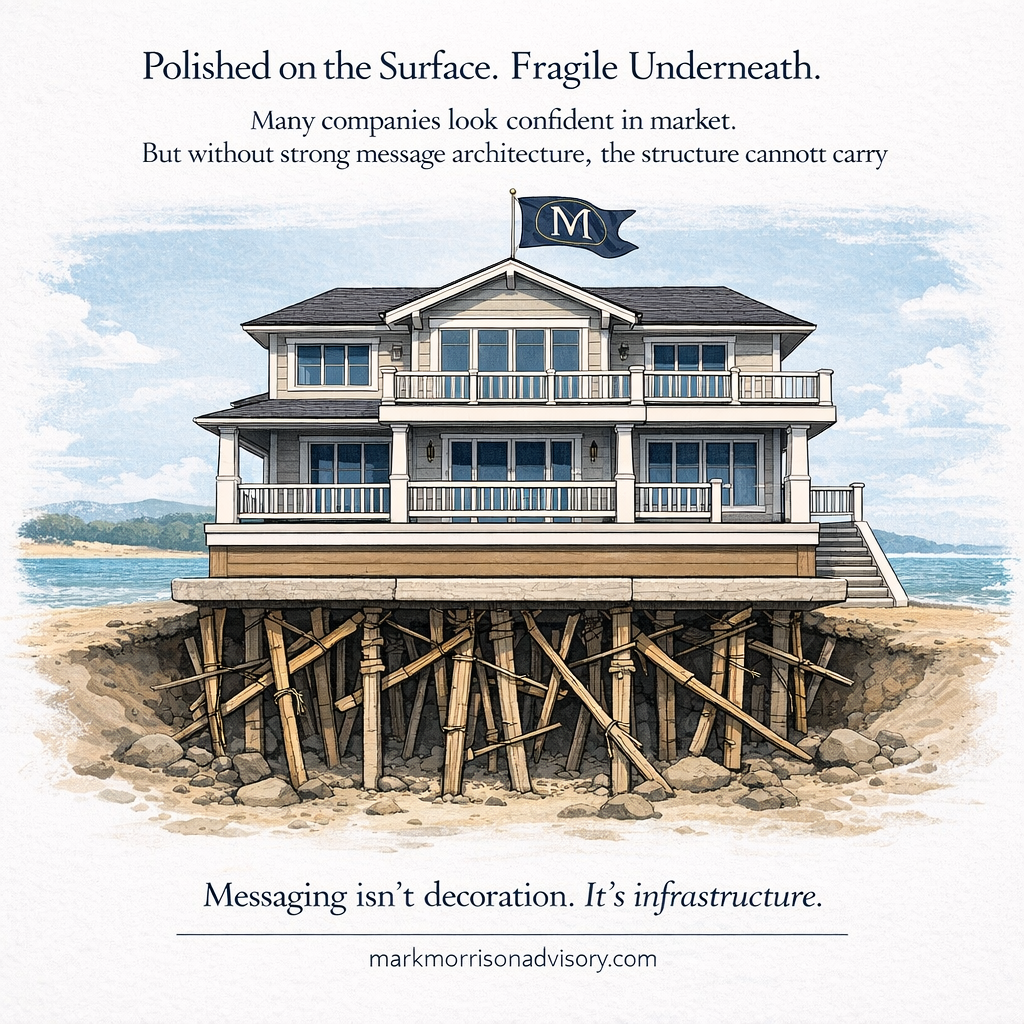
A blurred blueprint doesn’t create flexibility.
It creates hesitation.
The fix is structural.
Message Architecture™ is not just better copywriting.
It is the structure underneath the message.
The parts that reduce friction and make the buying decision easier.
The essentials are:
- Specific audience — Who is this actually for?
- Risk — What is at stake if nothing changes?
- Differentiating mechanism — How is this solved differently?
- Proof — Why should the buyer believe you?
When those four elements are clear, your message stops competing on general appeal.
It starts competing on fit.
And fit protects margin.
Clarity is a competitive advantage.
The companies that win are not always the ones with the best product.
Often, they are the ones whose message makes the decision feel clearer, safer, and easier.
Structural clarity reduces comparison.
It reduces doubt.
It reduces hesitation.
It reduces the pressure to discount.
That is what strong positioning does.
Without it, you get more friction, longer sales cycles, more objections, and slower decisions.
I learned this the hard way early in my career.
I did not learn it in theory first.
I learned it in direct response.
I learned it when I was running my own mortgage company and I was floundering.
At the time, my messaging tried to speak to everyone:
- First-time buyers
- Move-up buyers
- Luxury buyers
- Vacation buyers
- Credit-challenged buyers
- Reverse mortgage buyers
- Self-employed buyers
It was too broad to carry conviction.
I had to rebuild the message from the ground up:
- the audience
- the problem
- the stakes
- the differentiating mechanism
Once I sharpened the position, optionality decreased.
Revenue increased.
Margin improved.
The message stopped sounding available to everyone and started sounding right for someone.
And that changes everything.
Most founders have gone through this phase at least once.
Broad message. Broad audience. Weak conviction.
Because when optionality disappears, the buyer stops asking:
“Who else does this?”
They start saying:
“This is built for us.”
That is the shift.
That is the architecture I fix.
If your message is working harder than it should to generate revenue, the issue may not be effort.
It may be structure.
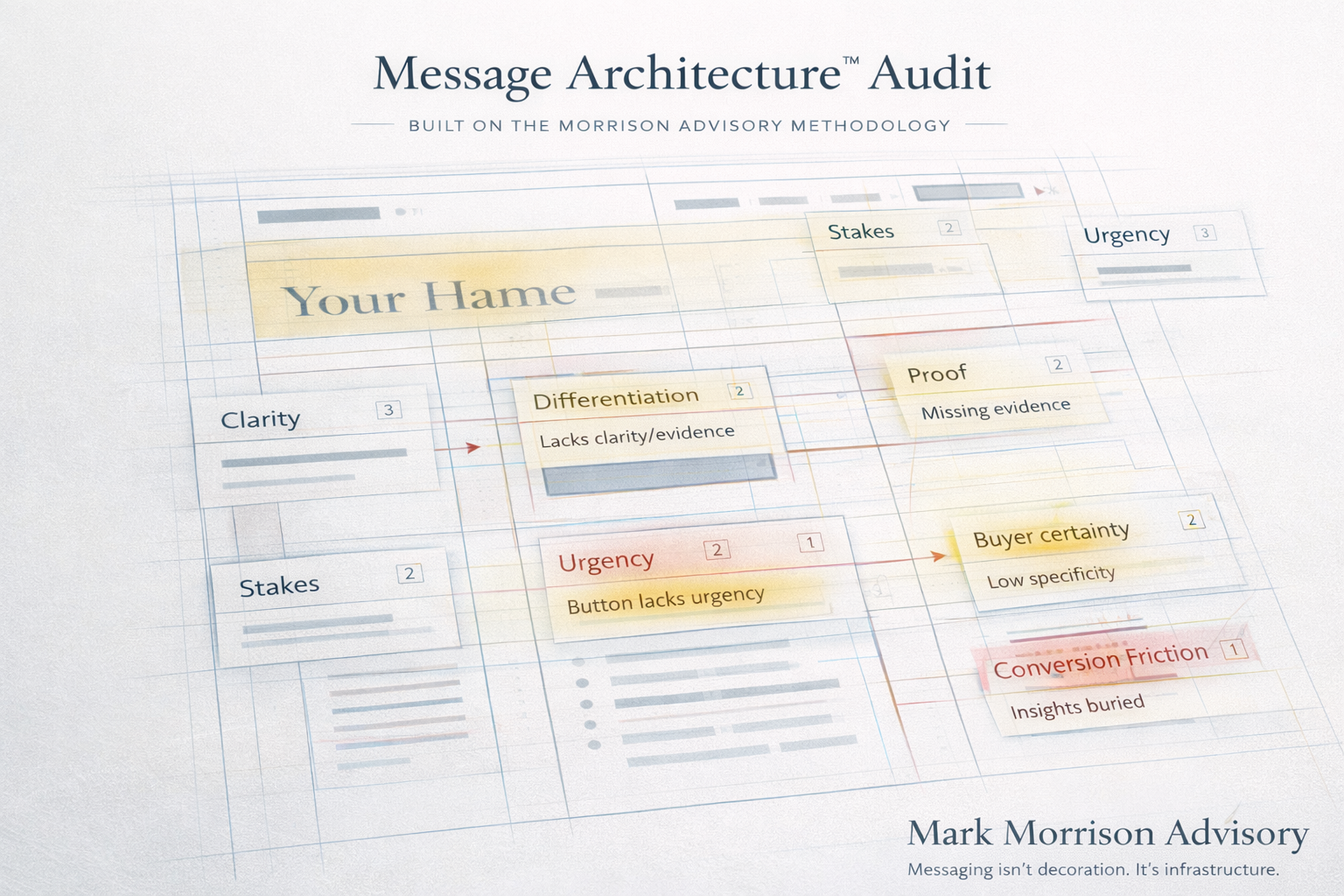
You may need a Message Architecture Audit™ – Built on the Morrison Advisory Methodology
Every click, scroll, and pause in a buying journey reflects the story your messaging is telling.
What story are you telling?